
LaTesha Melton, Community Advocate
By Les Gura
For the past seven years, a growing initiative in Richmond, Virginia, has improved health services in the city’s six large public housing developments by connecting residents not just with a weekly visiting nurse practitioner, but perhaps more important with a community advocate.
The advocates are residents of the housing complexes themselves. They receive training for some basic services—taking blood pressure and blood sugar, giving cardiopulmonary resuscitation—but their role is far deeper.
“They really are the faces of their community,’’ says Amy Popovich, RN, MSN and program director of the Resource Centers in the Richmond public housing developments. “They navigate people to medical homes and medical and community resources. And they do it in such a way that is very relatable and pertinent to the people who they’re serving in the community.
“It’s different and better than what the medical professional world does,’’ Popovich says. “They speak the same language and oftentimes have been there themselves. They’re open and sharing stories to give people hope. They let their people know they can make these changes in their lives as well.’’
A model for others
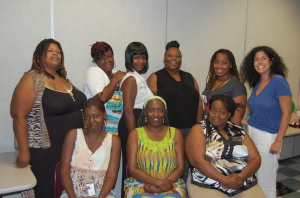
Starting left to right- (all CAs except Denise Wise, CA Supervisor) Patrice Shelton, Shikita Taylor, Kimyatta Moses, Brenda Kenney, Denise Wise, Melissa Hayward, Stephanie Carrington, LaTesha Melton, and Camila Borja
The Resource Centers are funded through a collaboration of agencies: Richmond City Health District, the City of Richmond, Richmond Development and Housing Authority, Community Foundation, Richmond Memorial Health Foundation, Virginia Health Care Foundation, VCU Health and Bon Secours Health System, Inc.
One goal is to improve health in Richmond public housing in many ways—to reduce the prevalence of chronic disease such as hypertension and diabetes, as well as reduce sexually transmitted infections and teen pregnancy. A second goal is assisting public housing residents to learn new skills, find employment or better employment, and perhaps leave public housing.
Popovich says the advocates, because they are part of the public housing world and now in stable jobs, offer a model to others.
The six women who are community advocates, she says, “have been able to leave federal and state resources and programs, provide for their families, take care of their own health and get a primary care doctor.’’
Community advocates bring results
The results of having these community advocates—in addition to the nurse practitioner, nurses and support staff for the six Resource Centers—have been startling. Popovich says last year brought 3,000 visits to Resource Centers representing more than 2,000 patients.
One health result? Statistics show that teen pregnancy from 2008 to 2014 dropped 40 percent in the city of Richmond. Popovich says that can at least partly be credited to the work of the Resource Centers and their teams. Not only do the centers distribute condoms and information about sexually transmitted infections, but the advocates are there to provide role model support and coaching for teenagers.
Listening, connecting, supporting
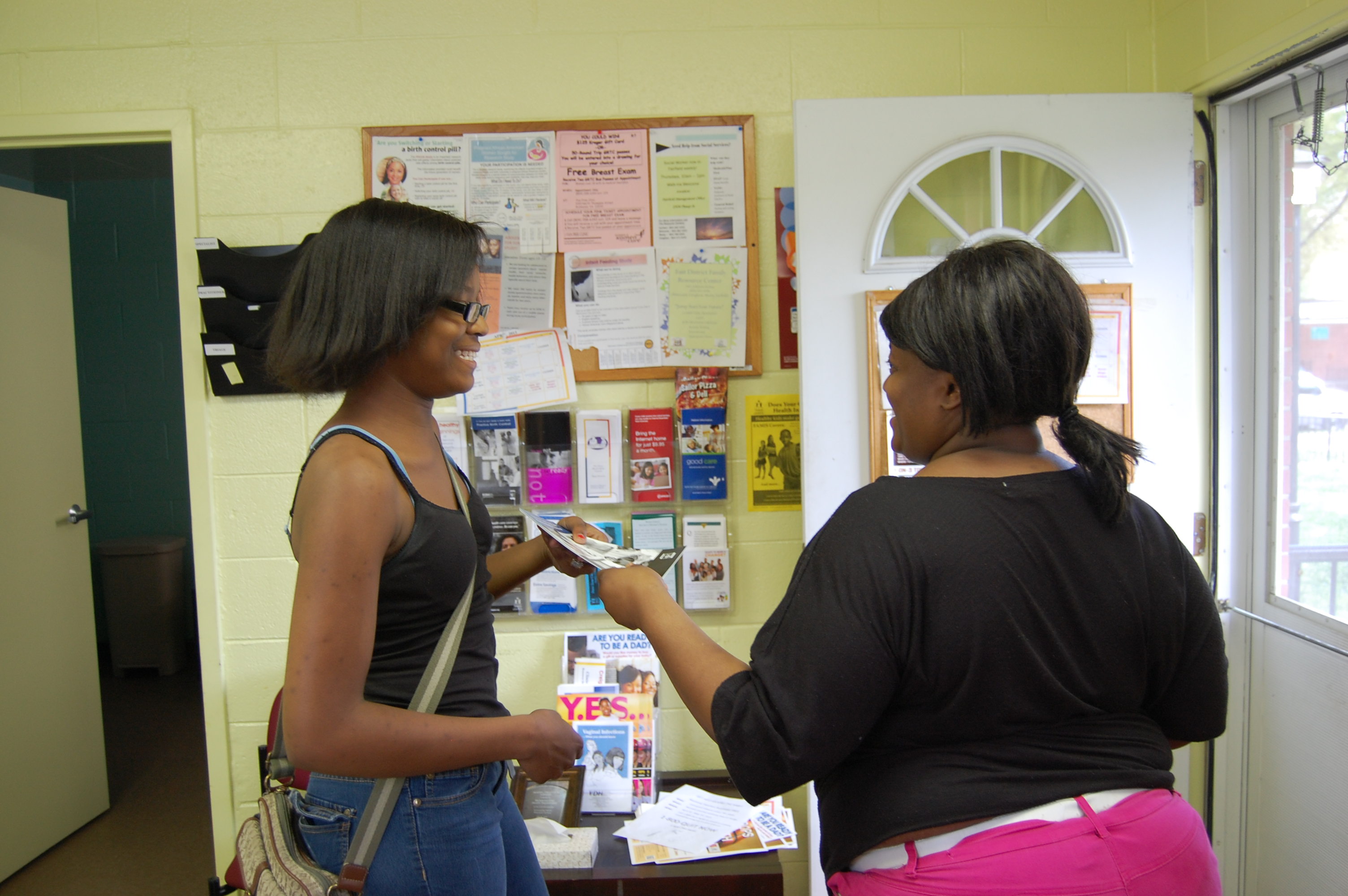
Stephanie Carrington, Community Advocate
Patrice Shelton, the community advocate for Hillside Court, was a longtime Walmart employee, but had been unemployed for about three years when the opportunity arose for her as an advocate. It’s a role she says is natural.
“I am a question person,’’ she says. “So if I’m not understanding something, or I’m in a room of people and they don’t understand and are too shy, I’m quick to ask. My passion is for elderly people and kids. People who can’t speak for themselves.”
She says the key to her job is listening.
“We make sure we are all ears, even if it has nothing to do with the job,’’ Shelton says. “Stress affects your mental health, and talking it out sometimes eases stress. Part of my job is just to sit and listen to them.”
Shelton also is able to help connect residents of her development, as well as anyone else who happens to stop by, with resources they might need beyond health checks.
“We try to find places that will help you with a car payment or utilities or rent,’’ she says. “If you don’t have insurance we’ll help you get it. We’ll try to get you a primary care doctor (as opposed to having to use only the clinic or having to go to an emergency room). My thing is a one-stop shop, very changeable to what the community needs.’’
That attitude is what makes the community advocates such an effective tool in the battle to improve health, Popovich says.
“Advocates serve as peer and mentorship support. People may come into one of our centers just to talk with an advocate over where they are in life,’’ Popovich says. “It’s more than just numbers; they serve as a support system to the community.’’
Photos: Top and bottom, community advocates. Middle, the staff.
0 Comments