
By Fiona McBride
Harlem, New York
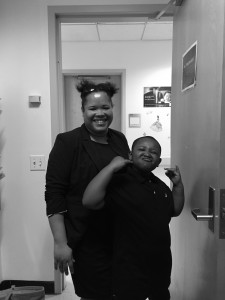
Sherid and her 6-year-old son, Treyvon, are sitting at Dr. Periasamy’s office in Harlem Hospital on a hot Tuesday evening in August. They’ve just finished meeting with the doctor and nutritionist in order to enroll in a prescription program that should promise better health and food accessibility for Treyvon, as well as Sherid and her husband. After successfully enrolling, they receive their first prescription, which they’ll fill this Friday — at the farmers market. This week, Sherid and her son have their hopes set on peaches and pears.
They found out about the program from Dr. Periasamy, Treyvon’s primary provider, who directs the Pediatric Residency Program at Harlem Hospital. Treyvon, who is most excited about the program for its promise to make him taller and stronger, enrolled on the recommendation of the doctor, who was concerned about how poor diet may be affecting his health.
A fruit and vegetable prescription
Harlem Hospital is one of three hospitals in New York City’s Health and Hospitals Corporation (HHC) that is offering Wholesome Wave’s Fruit and Vegetable Prescription Program to pediatric patients suffering from or at risk of diet-related illness like Type II Diabetes. Instead of receiving a prescription for medicine to fill at the pharmacy, they receive one for fresh food to be redeemed at the farmers market. Patients at Harlem receive $1/day per family member – leaving Sherid’s family with about $21 to spend at the market each week.
 Treyvon and Sherid do most of their prescription shopping at the 137th Street Harvest Home farmers market, set up adjacent to the hospital on Fridays between 7am and 8pm, and close to their 135th street neighborhood. Sherid and Treyvon attend the market each week, stocking up on fresh produce, which they prepare throughout the week and freeze when excess is available.
Prior to the program’s start, eating a diet rich in fruits and vegetables has been a challenge for Sherid and her family, in large part because of financial barriers. Produce in their Harlem neighborhood can often be out of reach due to cost: “There’s grocery stores. The fruit is a little cheaper, but it’s still expensive…Cherries are my treat, when we have enough money.” She laments that generally, “We don’t really buy fruits and vegetables.” Still, Sherid has done her best to get fresh food into her family’s home when possible and suggests that small changes in the shopping environment have allowed her to follow through on her goals more often. For instance, her local grocery store plays “soothing music, gospel” allowing her “to think about and then choose the healthier option. Instead of just grabbing cookies. Because that’s not healthy.”
I don’t want him to become a diabetic… I want him to learn
She explains her reason for enrolling her son in the program in simple terms: “Fresh food is expensive. We are going to start eating fresh and vegetables and they [the clinical team] are going to help us.” Both Sherid and Treyvon are excited to begin eating more fresh fruits and vegetables, and Sherid has hopes this will improve Treyvon’s health: “I don’t want him to become a diabetic. That means shots and not managing sugar. I’m hoping that he’ll like more fruits, try different things.”
Sherid has now lived in New York City for 18 years, and is therefore familiar with the lack of access to fresh affordable food. However, she maintains crisp memories of her childhood in Belize which offer a model of food culture different to what she experiences today: “ I used to see my mom cooking…we didn’t have a fridge, we used the neighbor’s fridge.” The community spirit around food that characterized her time growing up in the Garifuna community in Belize remains important in her envisioning of food and family. These memories also inform what she prepares for the family now: “I make curry and basically Caribbean foods….Hudutu – my grandmother makes it. Plantains boiled in milk.”
And while fresh food may be less accessible now than in her youth, Sherid is more than prepared to encourage Treyvon to eat well, especially with the prescription program to support her and a number of clever tactics up her sleeve. Having Treyvon’s grandfather be the first to model eating a new food is one useful strategy: “He’ll try with his grandfather.” Slicing fruit like cantaloupe into star and heart shapes has also proven successful in helping Treyvon and the family reach their goals. She makes sure not to overlook vegetables either: “I sneak ground carrots in spaghetti sauce. But I don’t want to just sneak. I want him to learn. I want all 3 of us to get healthy. We’ll try it…I want to understand that we can all be healthy.” Sherid cannot wait to see Treyvon feeling better as a result of these shifts: “It’s for your energy,” she exclaims as Treyvon flexes his arm muscles jokingly.
This article first appeared on the Wholesome Wave blog. Thanks to our friends at Wholesome Wave!
0 Comments